Why Rhyme?
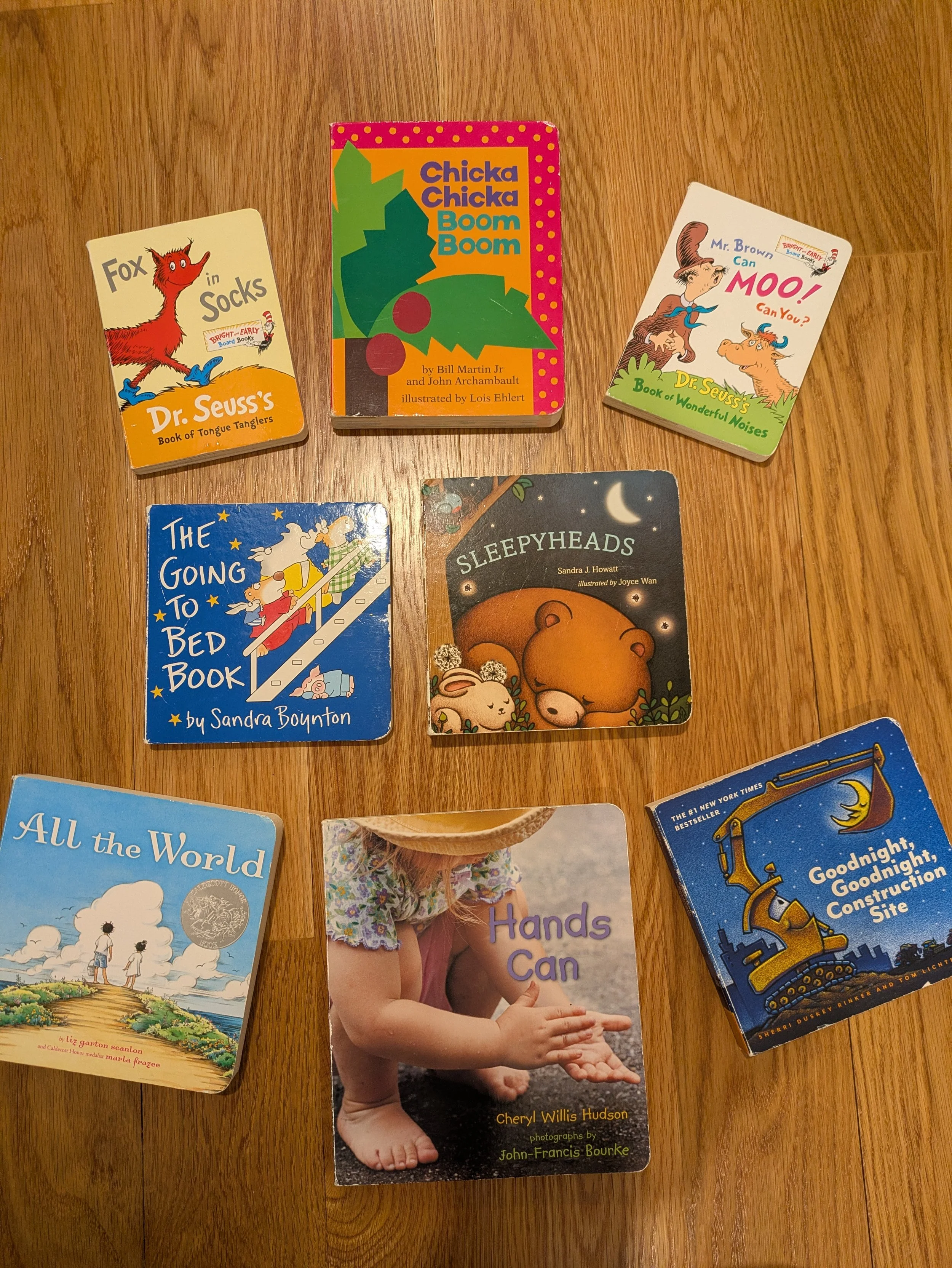
Some of the rhyming books that were on heavy rotation when I started writing RORO’S PARIS
As a mom of a young kid, I find myself gravitating towards rhyming books at story time. To me, they’re simply more satisfying to read out loud (as long as the rhymes are written well).
When I started writing RORO’S PARIS, I found myself naturally writing in rhyme. But I had no idea how tough writing a 32-page rhyming children’s book would be.
Sure, my first drafts had lines that rhymed with one another. But they didn’t flow seamlessly. The rhythm wasn’t spot on.
I quickly learned how difficult it was to write “good” rhyme. The kind where you don’t stumble over the words, or awkwardly stress syllables that aren’t normally emphasized. It’s not just about making the last word of each line rhyme, and it’s definitely not about having the same number of syllables per line.
There were countless rewrites of RORO’S PARIS over a 2+ year period. I studied rhyme and meter (huge shout out to Renee LaTulippe’s extremely helpful videos!). I painstakingly dissected every line numerous times to ensure the rhythm was just right. But perhaps most importantly, I edited the manuscript so many times to make sure each word mattered, the rhymes themselves made sense, and there was an actual story to tell.
In the end, I found writing in rhyme to be a fun challenge. Fellow rhyming author and jigsaw puzzle lover Lisa Varchol Perron said something in a blog interview that 100% resonated with me. Writing in rhyme is akin to putting together a puzzle: you need to find the right pieces — or in this case, words — to get a line to work perfectly in a stanza. But as much as I love putting together puzzles (both jigsaw and literary), I would be lying if I said I didn’t die a little every time I got an editing suggestion. See, when you write in prose, you can swap out words fairly easily, or cut whatever is deemed unnecessary. With rhyme, it’s not that simple. With every edit, you could start from square one and change more than just that one word or line to get the rhyme to ultimately work. There have been times where I spent literal days rewriting a single line!
Like many authors, before deciding to self-publish, I queried RORO’S PARIS to literary agents. I quickly found myself in an uphill battle. There were so many agents I couldn’t submit to because their manuscript wishlists specifically requested “no rhyme.” And it’s no real industry secret that many editors at publishing houses shy away from it, too (presumably because they get so many manuscripts with bad rhyme). My manuscript was a tough sell from the get-go.
But I believed in writing RORO’S PARIS in rhyme because I saw the benefits of rhyming books. Not only did I feel like it made for a better read-out-loud book, but I also saw how rhyme helped my son at a young age recognize and memorize patterns. Rhymes are proven to be beneficial for babies’ and kids’ brain development (here’s one article of many), so to me, it was a no-brainer to write a rhyming book that also exposes kids to the joys of travel and experiencing another country and culture.
What are your thoughts on rhyming books? I’m curious to hear!